

Dyslexia & The Brain
Resource Hub
See the World Through Dyslexia Brain.
Understanding the science behind how dyslexic minds learn, process and connect information.
Dyslexia is more than a difficulty with reading and spelling. It is a neurodevelopmental difference that affects the way the brain processes language and written information. Research using brain imaging and other neurological methods continues to help us understand why dyslexic learners may approach reading, language, memory, and problem-solving differently.
At the Caribbean Dyslexia Centre, we believe that understanding the brain is an important part of understanding the learner. The more we learn about dyslexia, the better equipped we are to develop teaching strategies that work with the way a student learns not against it.
Dyslexia is more than a difficulty with reading and spelling. It is a neurodevelopmental difference that affects the way the brain processes language and written information. Research using brain imaging and other neurological methods continues to help us understand why dyslexic learners may approach reading, language, memory, and problem-solving differently.
At the Caribbean Dyslexia Centre, we believe that understanding the brain is an important part of understanding the learner. The more we learn about dyslexia, the better equipped we are to develop teaching strategies that work with the way a student learns not against it.

[Guaranteed & certified]
What Happens in the Dyslexic Brain?
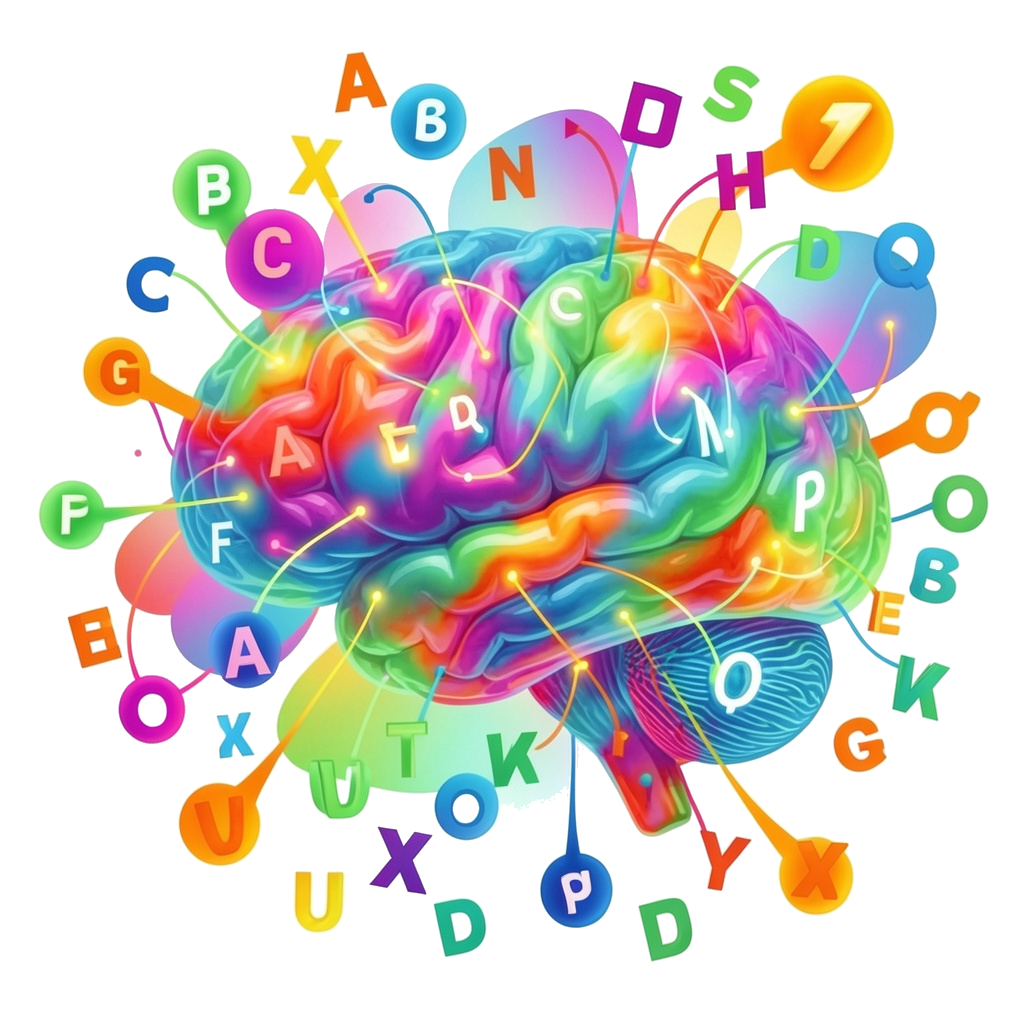
Reading is a complex skill that requires different areas of the brain to work together. For many people with dyslexia, research has identified differences in the way networks involved in language, phonological processing, reading and attention are activated and connected.
These differences do not mean that a dyslexic brain is less capable. They help explain why some approaches to learning may be more effective than others.
Understanding these differences allows educators and parents to move beyond simply asking, “Why is this student struggling?” and instead ask, “How does this student learn best?”
These differences do not mean that a dyslexic brain is less capable. They help explain why some approaches to learning may be more effective than others.
Understanding these differences allows educators and parents to move beyond simply asking, “Why is this student struggling?” and instead ask, “How does this student learn best?”

[Guaranteed & certified]
Dyslexia Is a Difference, Not a Deficit.
Dyslexia should not be viewed as a measure of intelligence. A student may struggle with decoding a written word while demonstrating exceptional creativity, reasoning, visual thinking, problem solving, or the ability to see connections that others may overlook.
The goal is not to change the way a dyslexic mind works. It is to understand it, support it, and help each learner develop the skills and strategies needed to reach their potential.
Different minds need opportunities to learn differently.
The goal is not to change the way a dyslexic mind works. It is to understand it, support it, and help each learner develop the skills and strategies needed to reach their potential.
Different minds need opportunities to learn differently.
[Guaranteed & certified]
The Brain Can Change.
One of the most important areas of dyslexia research is neuroplasticity the brain's ability to adapt and change through learning and experience.
Research continues to investigate how reading development, educational intervention, and experience influence the neural networks involved in literacy. This is one reason early, appropriate support matters.
Learning is not simply about what happens in the classroom. It can influence how the brain develops and how different networks work together.
Research continues to investigate how reading development, educational intervention, and experience influence the neural networks involved in literacy. This is one reason early, appropriate support matters.
Learning is not simply about what happens in the classroom. It can influence how the brain develops and how different networks work together.
Resource Hub
Explore Current Dyslexia Research
Dyslexia research is continually evolving. Scientists are using MRI, fMRI, EEG, and other methods to investigate the brain networks involved in reading, language, memory, attention, and learning.
Below are selected research papers and reviews that provide a window into current scientific understanding.
Below are selected research papers and reviews that provide a window into current scientific understanding.
Neuroimaging Meta-Analyses of Phonological Awareness Deficits in Children with Developmental Dyslexia
This recent meta-analysis examined nine neuroimaging studies involving children with developmental dyslexia and typical readers, focusing on the neural basis of phonological-awareness difficulties.
Read More Dysfunction of the Magnocellular Subdivision of the Visual Thalamus in Developmental Dyslexia
Dysfunction of the Magnocellular Subdivision of the Visual Thalamus in Developmental Dyslexia
Learn More Source Reconstruction of Clinical Resting-State EEG in Children with Developmental Dyslexia
Using resting-state EEG data from children with dyslexia and typically developing controls, researchers investigated differences in brain activity and functional connectivity.
Learn More A Discovery and Replication Study of Dyslexia Does Not Reveal Reproducible Gray Matter Volume Differences
This study is particularly valuable because it examines an important question in dyslexia research: whether previously reported differences in brain grey-matter volume can be consistently reproduced.
Read More Differential Functional Connectivity Between Silent Reading and Resting-State fMRI
Researchers compared brain connectivity during silent reading and resting-state conditions in children with and without dyslexia.
Learn More Research Is Changing What We Understand About Dyslexia
The science of dyslexia continues to develop. New imaging technologies, larger datasets, and improved research methods are helping scientists examine dyslexia from multiple perspectives.
Learn More Resting-State Functional MRI in Dyslexia: A Systematic Review
This systematic review examined research using resting-state fMRI to investigate functional connectivity in people with dyslexia.
Read More Enhanced Functional Connectivity of Executive Functions and Attention Networks During Reading
This research examined functional connectivity involving executive-function and attention networks during reading and narrative-comprehension tasks in people with dyslexia.
Read More 